
120 — October 2026
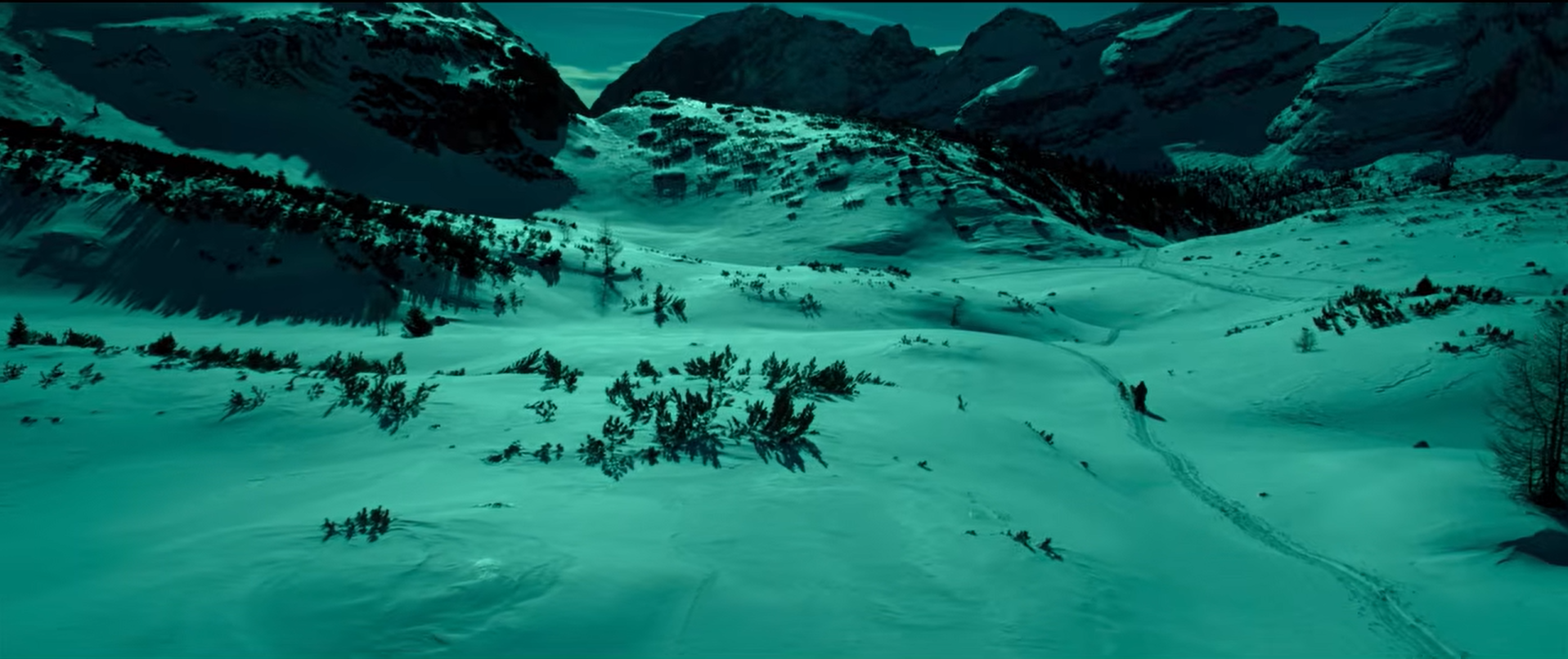
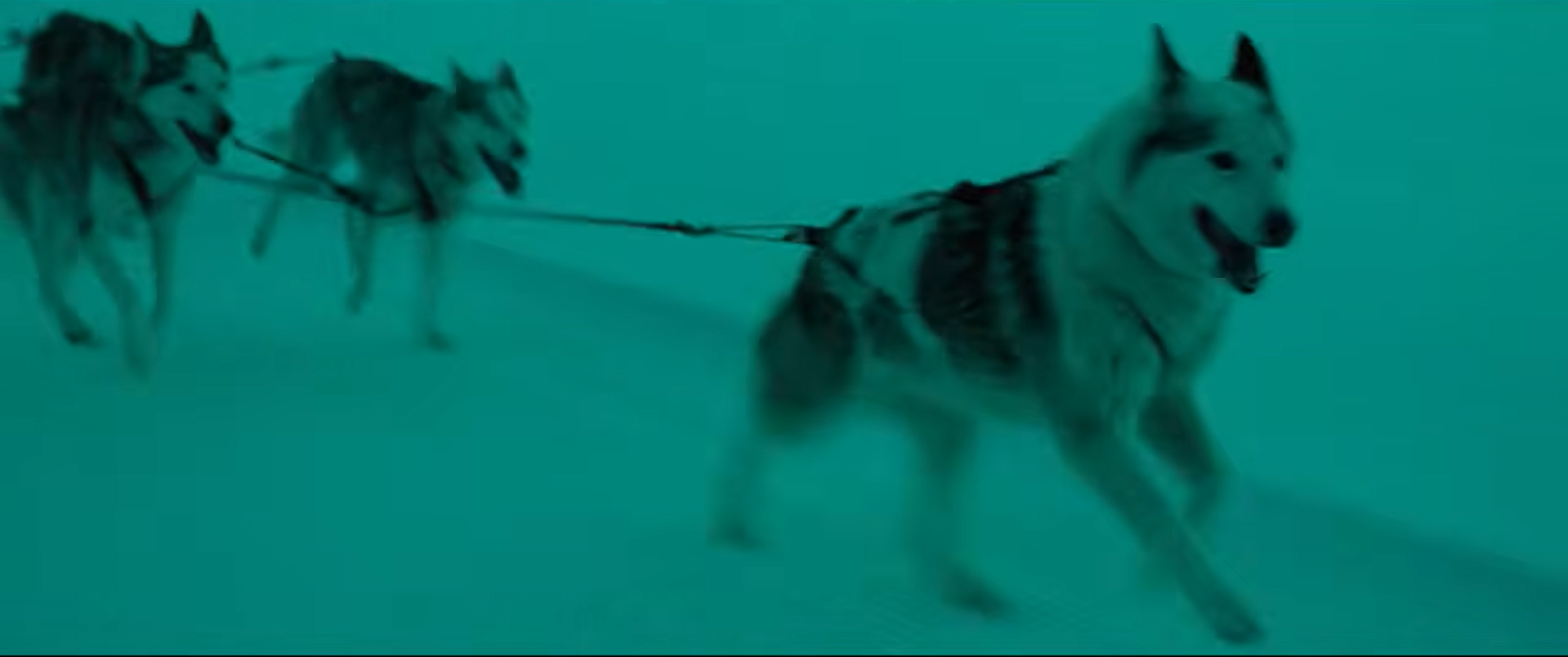
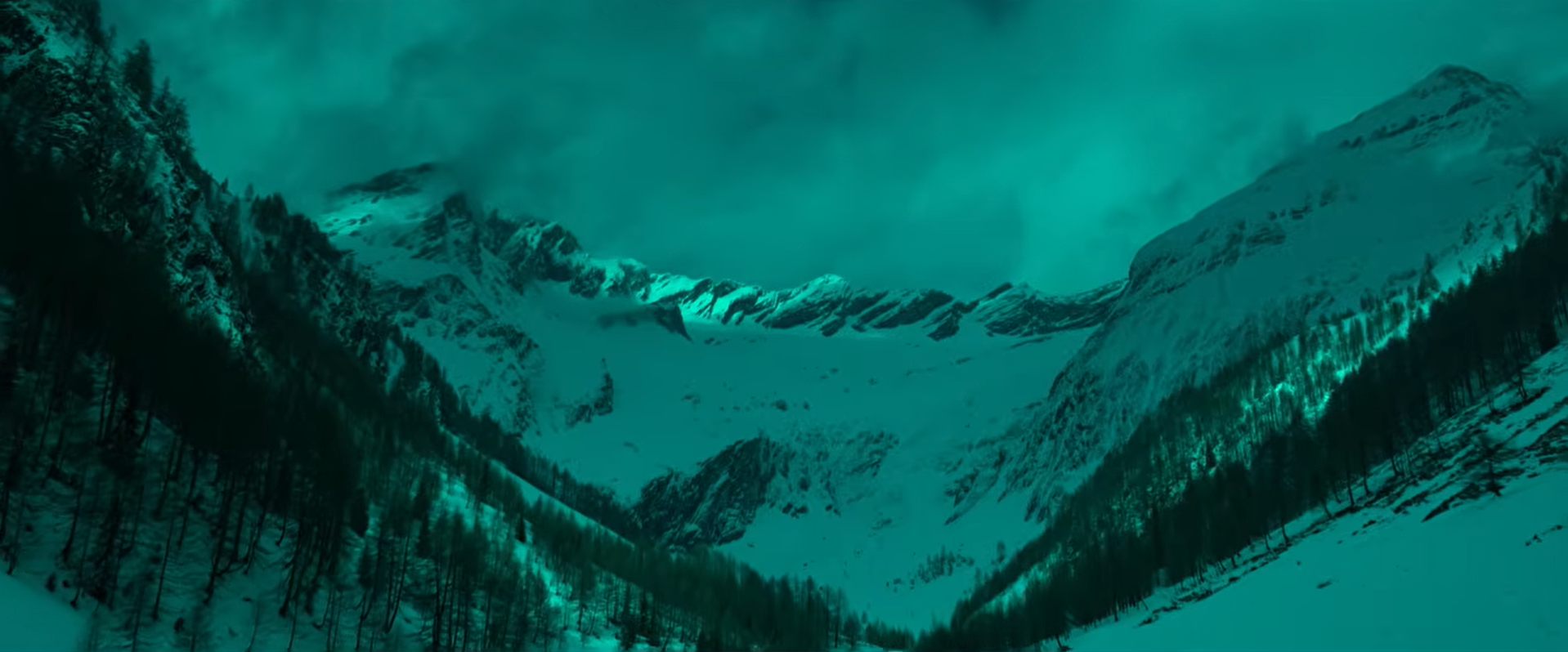
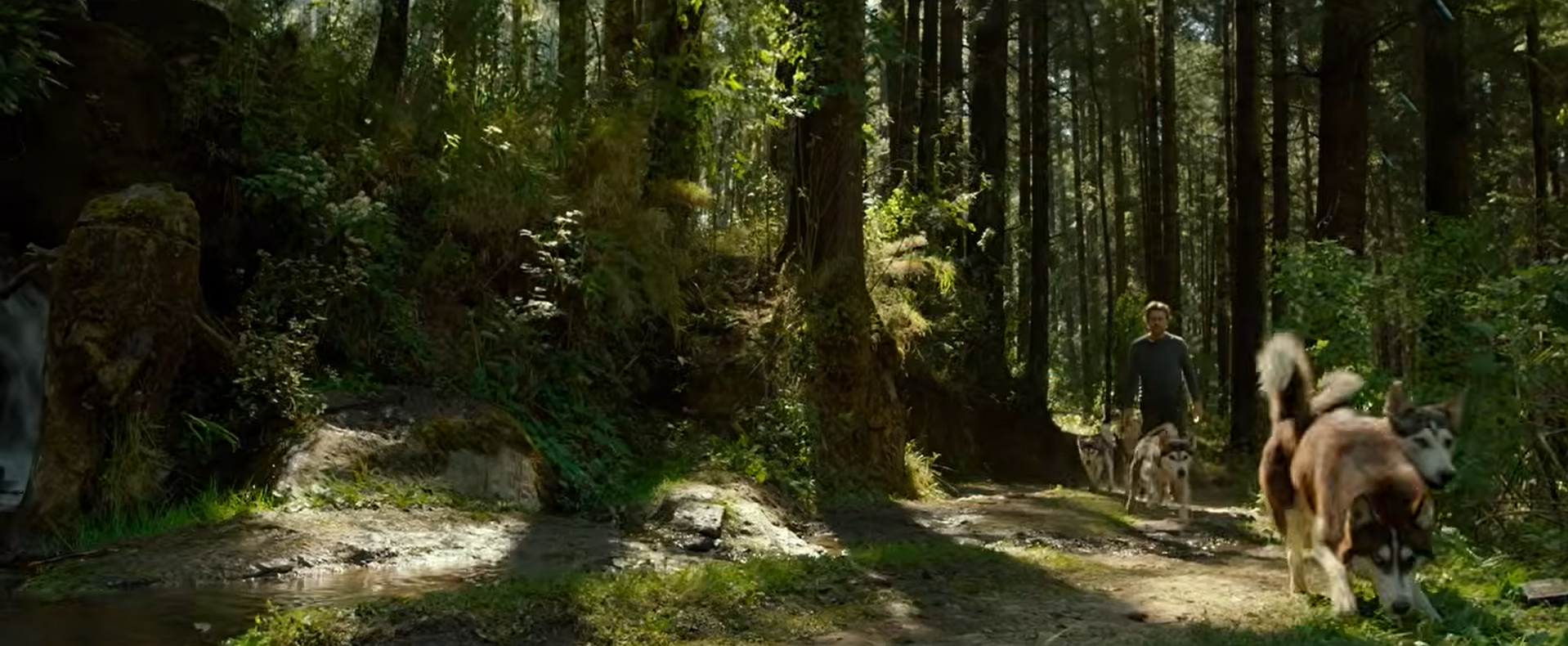
Film stills from Siberia (2020), directed by Abel Ferrara
A Siberia of the Mind
Julia Alekseyeva
The title of Abel Ferrara’s Siberia (2020) does not primarily name a region, but a mental state. Willem Dafoe’s protagonist Clint, apparently a barkeep in a remote far north wilderness, journeys through his subconscious. Structured as a surrealist sequence of dreamscapes, the film is partially an embodiment of toxic masculinity: Dafoe dreams, hallucinates, or imagines a Russian-speaking woman (Cristina Chiriac), whom he has impregnated; she is flanked by a curmudgeonly post-Soviet grandmother who enjoins him to “do the right thing,” as he sweeps the modelesque pregnant woman (played by Ferrara’s own wife) into his arms for a night of fireside lovemaking.
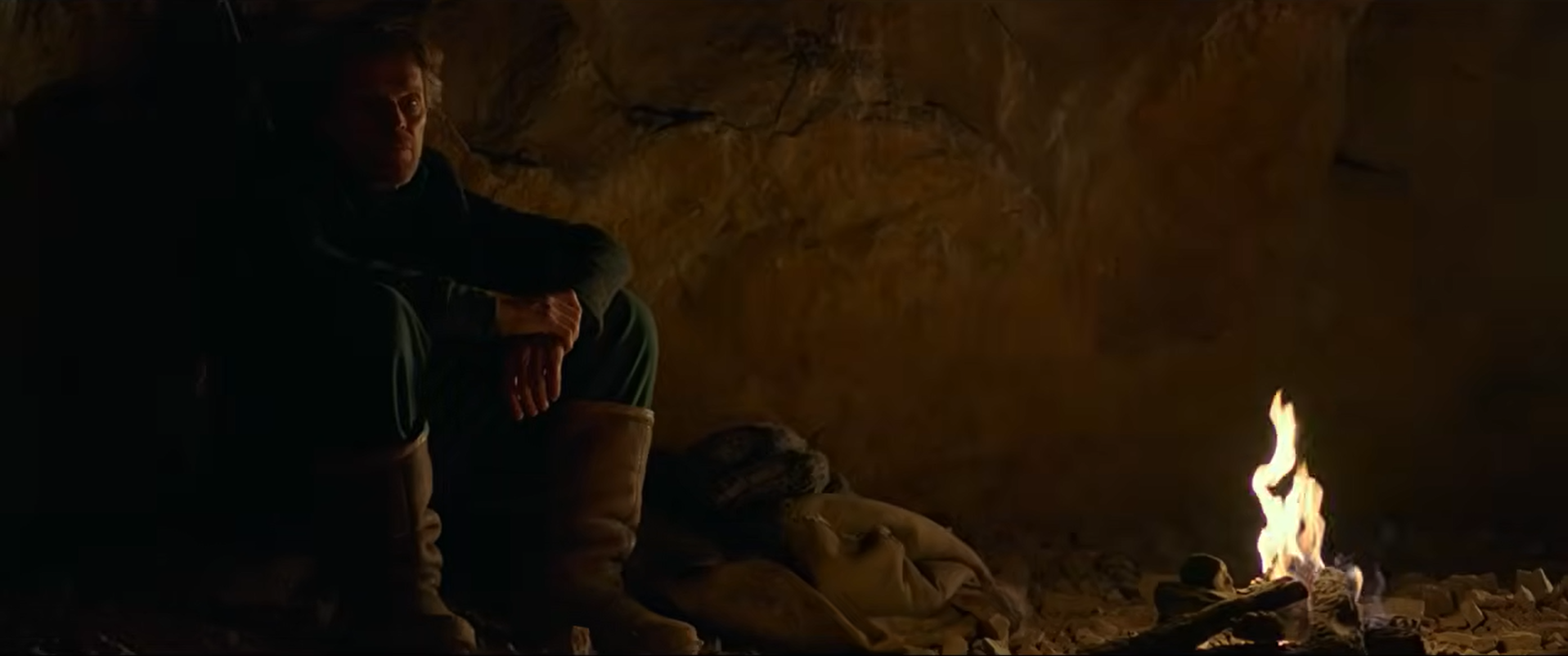
When we first meet her, the woman is naked under a thick fur coat—the film’s first clue that the eponymous Siberia is not the literal expanse of multiethnic post-Soviet territory, but a Siberia of the mind. The rest of the film, almost entirely bereft of dialogue, sees Dafoe on a hallucinogenic “dark night of the soul.” The only clue that connects the viewer to some semblance of the “real” (always in quotation marks, always questioned) are the sled dogs that flank Dafoe on his Jung-inspired mystical journeys: through dark spruce forests, through desert dunes. Dafoe arrives at select primal scenes seemingly plucked from dreamscapes in his subconscious: a separation from his wife (Dounia Sichov); a reckoning with an abusive father, or father-figure; an attempt to connect with his silent son (played, tellingly, by Ferrara’s daughter). Always the protagonist returns to the snow-filled, forested expanse of Siberia, as if to nominate “Siberia” as the Ur-psychic landscape.
This is a Siberia quite divorced from the literal—not least because the film was shot not in Siberia but in the Tyrol region of the Italian Alps. Also intriguing is that an Indigenous Inuit character appears in the film, speaking a dialect of the Inuit language, rather than a member of one of many existing Indigenous communities in present-day Siberia: the Buryat, Chuvash, Yakut, Nenets, Chukchi, etc. All of these peoples continue to have vibrant communities, and it would not have been particularly difficult for Ferrara to cast a more credible Indigenous person of the Far North. This led some reviewers to assume the film is “set” in northern Canada, rather than the Russian North—although on such an interpretation, the Russian-speaking babushka and her grandmother become even less believable than they already are. It is best, rather, to assume that the film is not “set” anywhere specific; that, like its Jungian inspiration, the film travels through certain landscapes that exist more as soulful archetypes than literal locales.
There is nothing inherently wrong with enlisting Siberia as a mythic or metaphorical region rather than a literal place, although it is perhaps a little strange to choose “Siberia” as the film’s moniker, rather than a more abstract concept: The Far North, for instance. The word Siberia might conjure, especially for the Western European or North American viewer, a place of literal torture, of Soviet Gulags, impossibly inhospitable weather, and isolation (whether desired or horrifyingly agoraphobic). With these associations in mind, it makes sense that Dafoe’s Clint travels in “Siberia” rather than, say, the Norwegian territory of Svalbard, or Canadian-occupied Nunavut, which do not have the same dystopian sheen.
Yet Siberia, covering an enormous expanse (77%!) of Russia’s total land area, a massive 5.1 million square miles, is not just an idea, but a real place. It is one that the French new wave filmmaker Chris Marker featured in his epistolary documentary Letter from Siberia (1957), where Siberia is treated with loving, patient, yet playful and exuberant care. Marker’s film is, of course, shot in the literal place that is Siberia: mostly Angarsk and Yakutsk, as well as Irkutsk and Aldan. Yet it isn’t devoid of dreamscapes, and in fact Marker, in characteristic fashion, imagines a number of ludic scenarios: an animated advertisement for reindeer, or a black-and-white newsreel about flora, fauna, and people of the region (in the early Soviet vein, inspired by his favorite filmmaker, Dziga Vertov). Marker also uses his footage of Siberia to critique the heavy ideological weight bestowed on the then-Soviet region, in a now-infamous sequence in which he repeats footage of the city of Yakutsk three times: first, with cloyingly upbeat socialist realist voiceover, then with a dreary and dystopian Western gaze; and, finally, with allegedly objective neutrality. Yet, as the voiceover then points out, “objectivity isn’t the answer either,” and the film leaves the last word to Siberian images themselves—images with which the socialist and travel-loving Marker feels a profound, yet not unambiguous, affinity.
In a more contemporary and decidedly post-socialist bent, filmmaker Werner Herzog explored Siberia in his 2010 documentary Happy People: A Year in the Taiga. The film takes place in Bakhtia, an exceptionally small village (population: about 300) along the Yenisei River in the Siberian taiga (or boreal forest). As one would expect from the title, the film is actually (uncharacteristically, for the frequently morose Herzog) quite enchanted with Siberia and its stewards and residents. To be sure, the film discusses the difficult conditions of life in the taiga, but the taiga is also shown as a place of love and freedom. Interviewees, largely Russian trappers, discuss how much they love living there, how attuned to nature they become. It is also, for better or for worse, depicted as a place of freedom, and Herzog’s voiceover declares: “They are truly free. No rules. No taxes. No government. No laws. No bureaucracy. No phones. No radio. Equipped only with their individual values and standards of conduct.”
Both Herzog and Marker’s films are examples of Siberian images that counter the traditional Cold War-influenced idea of Siberia as a place of darkness or unspeakable horror. Arguably, Happy People continues Herzog’s fascination with gritty individualism and his pessimism concerning contemporary society, but it is far less solipsistic than Ferrara’s navel-gazing. What fascinates and delights me about Herzog and Marker is their palpable admiration for the region and its people, and the way both of their films elicit sensorial delights. The fact that their films ring true for me is not just because they are documentaries, and therefore inevitably tied up in murky beliefs surrounding documentary “truthfulness.” They also feel true because their vision of life in the Far North aligns with my own research and experiences.
Earlier this year, I participated in the Arctic Circle artist residency, which takes scholars and artists on a three-mast schooner circumnavigating the Svalbard archipelago, reaching 80 degrees north. I watched Siberia while on this residency, in a brief respite from working on a graphic novel about the Far North. Perhaps like Ferrara’s Clint, before arriving in Svalbard I had my own, media-informed ideas and images around the Great North; I imagined it as an intensely solitary experience, one in which the inhospitable climate would lead to some kind of primal and psychoanalytical transformation. In reality, I experienced awe and delight, an experience somehow both social and solitary but hardly dystopian (despite the somewhat uncomfortable cabin arrangements). Humans are an inherently social species, and even in the remotest corner of the globe—Svalbard has never had Indigenous habitation, and its largest (population: 2500) city, Longyearbyen, is an “intentional community”—thousands of happy people flock. They seem far happier, in fact, than most people I see in New York City, and my interviews with the international community of Svalbard (which also, interestingly, has several Russian settlements) showed people of proudly weird and rugged persuasion, a kind of Portlandia devoid of twee pretentions.
Ferrara’s Siberia does not describe these strange and happy people, and it is not meant to. These days, I am most interested in exploring the interstices of these two projections: a Siberia-of-the-mind and the Siberia-in-reality. This relation becomes complicated when Indigeneity is thrown into this odd juxtaposition. What beliefs, annoyances, or appreciations do autochthonous and migrant residents of the Far North have with the artists and writers who become obsessed with these regions? It is intriguing, also, that Siberia, though filmed pre-COVID, was released in the summer of 2020, at a time when many of us worldwide were encountering our own dark nights of the soul. Images of Siberia and the north abounded during that time; I remember scouring TikTok and Instagram for images of dark, boreal forests, for “nature is healing” memes. Friends and colleagues described their own obsession with images of ice, and one media scholar recently described how he read Anna Kavan’s 1967 novel Ice cover to cover dozens of times during the early pandemic years. We were looking, I think, for an escape, for a glimmer of hope, and for a more authentic life.
There is a quality of the Far North that may always remain in a mythic register, despite its literal existence. What Ferrara ignores (largely by design) is the wide gap between myth and reality, and the problematic way we extract what we wish from real, existing communities—of living, breathing people that just might show us, as in Herzog and Marker, an even better way to live.